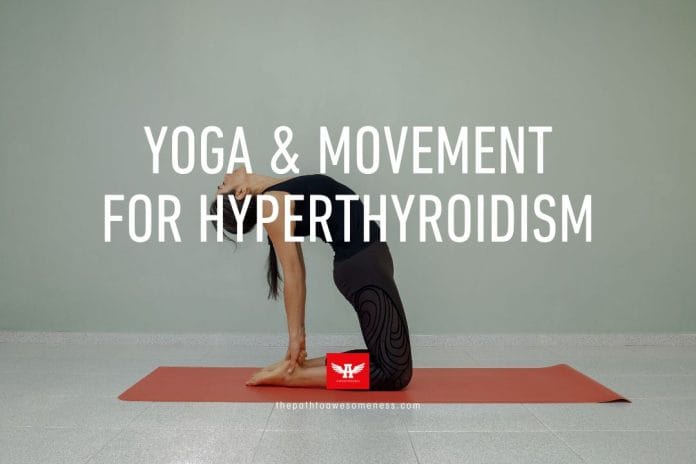
When your thyroid is in overdrive, everything can feel like it’s moving too fast—your heart, your thoughts, even your emotions. That’s because hyperthyroidism speeds up your metabolism and nervous system, which can lead to feelings of anxiety, tension, and exhaustion. This is where gentle, mindful movement comes in.
Unlike intense workouts that might leave you more drained, calming and grounding movement like yoga and slow breathwork can help restore balance. These practices work on multiple levels—physically relaxing the body, emotionally soothing the mind, and energetically aligning your system. Think of them as a moving meditation that tells your body: “You’re safe. You can slow down now.”
Yoga especially offers a beautiful pathway to reconnect with yourself. Through breath, gentle postures, and presence, you begin to shift out of stress mode and into a healing space. It becomes more than just exercise—it becomes a practice of self-awareness, self-regulation, and deep nourishment for your entire being.
Why Movement Matters in Hyperthyroid Healing
When you’re dealing with hyperthyroidism, your body is already running in high gear. That amped-up metabolism can lead to restlessness, racing thoughts, muscle tension, insomnia, and even panic-like symptoms. While it might seem counterintuitive to move more when your body is already overstimulated, the right kind of movement can make all the difference.
Gentle, intentional movement—like yoga, tai chi, walking meditations, or restorative stretching—helps release built-up tension, calm the nervous system, and bring balance to your body’s overactive state. It can ease symptoms like palpitations and anxiety, support better digestion and sleep, and create a sense of emotional and energetic grounding.
From a holistic perspective, movement isn’t just physical exercise—it’s emotional release, mental clarity, and energetic flow. It helps your system return to a natural rhythm where healing can actually take place. Whether it’s flowing through yoga poses, dancing in your living room, or taking a barefoot walk on grass, movement becomes medicine for every layer of your being.
Therapeutic Yoga Poses & Movement Practices
One of the beautiful things about yoga and mindful movement is that they can meet you exactly where you are—even in the middle of a hyperthyroid flare. The goal isn’t to sweat it out or push harder. Instead, we’re inviting calm, presence, and gentle flow to balance an overstimulated system.
Throat & Heart-Opening Poses
Certain yoga poses naturally stimulate and nourish the thyroid gland by bringing circulation to the neck and encouraging openness in the throat area. Shoulder Stand (with props or modifications), Fish Pose, and Camel Pose are classics for this. They also open the heart, making space for repressed emotions and truths that hyperthyroidism often reflects. Always work within your range—these poses are about opening, not straining.
Grounding & Calming Poses
To help calm the nervous system, restore breath rhythm, and quiet racing energy, grounding postures are your best friend. Think Child’s Pose, Legs-Up-the-Wall (Viparita Karani), and Seated Forward Fold. These poses activate the parasympathetic “rest-and-digest” response and create a felt sense of safety and stillness.
Gentle Neck & Shoulder Movement
Daily tension loves to settle in the neck and shoulders, especially with throat chakra imbalance. Gentle neck rolls, shoulder shrugs, and humming while moving help release that stuck energy. You can do these seated or standing—what matters is the softness and intention behind each movement.
Fluid Practices
If you’re feeling jittery or anxious, try movement that flows but doesn’t overwhelm. Qigong, slow Tai Chi-style sequences, or a meditative walking practice help you reconnect with your breath and body. Yin Yoga is also excellent—it uses long, supported holds to soften fascia and bring awareness deep into the body without efforting.
These practices are not about fixing anything—they’re about listening, supporting, and gently rebalancing your energy in a way that honors your body’s needs.
Breathwork to Calm & Center
When it comes to hyperthyroidism, your breath can be one of your most powerful healing tools. Breathwork speaks directly to your nervous system, signaling that it’s safe to slow down and soften. It supports not just your physical body, but your emotional and energetic systems too—especially when the throat chakra is in need of some love and opening.
Ujjayi Breath (Ocean Breath)
This slow, whispery breath (sometimes called ocean breath because of the soft sound it creates) gently warms and regulates the breath while supporting parasympathetic activation. It also resonates in the throat area, stimulating the thyroid and calming the overdrive. Inhale through your nose and exhale through your nose with a slight constriction in the back of your throat—like you’re fogging up a mirror, but with your mouth closed. Try this for 3–5 minutes during yoga or meditation.
Alternate Nostril Breathing (Nadi Shodhana)
This balancing breath practice harmonizes both sides of the brain, helps regulate energy, and soothes the hormonal system. Using your right thumb and ring finger, gently close one nostril at a time as you breathe in and out through the other. Inhale through the left, close it, exhale through the right. Inhale right, exhale left. Repeat for several rounds to feel calm and centered.
Lion’s Breath (Gentle Version)
This expressive breath releases tension in the throat and face—especially helpful if you often feel emotionally “choked up” or silenced. Inhale through the nose, then exhale through an open mouth with a sigh or gentle roar, sticking out your tongue. You can even pair it with a quiet growl if it helps move stuck emotion. Keep it light, playful, and heart-opening.
Each of these breath practices invites safety, presence, and space—exactly what your body craves when it’s been operating in high alert mode. Breathe in healing, breathe out pressure.
Integrating Yoga & Movement into Your Daily Routine
Making movement part of your healing doesn’t mean scheduling hour-long yoga classes every day. In fact, some of the most powerful practices are the simplest—and shortest. Just 10 to 15 minutes of intentional movement and breath can create a calming ripple effect through your entire system, especially when done at the right times.
Short morning or evening ritual:
Begin or end your day with a quiet yoga flow, grounding stretches, or breathwork. Mornings are great for setting a calm tone; evenings can help ease you into restful sleep. Try Legs-Up-the-Wall and Ujjayi breath before bed or a few shoulder rolls with affirmations when you wake.
Pre-lab/test ritual:
Feeling jittery before blood work or thyroid checkups? Use 3–5 minutes of calming movement—like Child’s Pose or gentle forward folds—paired with alternate nostril breathing. It helps settle anxiety, stabilize your heart rhythm, and bring a sense of inner steadiness.
Movement pairing suggestions:
After gentle yoga, sip a cup of calming lemon balm or chamomile tea to deepen relaxation.
Follow your practice with a few minutes of journaling about what your body and heart feel.
End with an affirmation: “My body is safe. My energy is balancing. My healing is already happening.”
Your movement practice doesn’t have to be intense or perfect—it just has to be yours. Let it become a daily ritual of connection, not just correction.
Research & Practitioner Insights
The science is catching up to what many healing traditions have known for centuries—gentle, mindful movement does more than stretch muscles. It actually supports your thyroid and calms your nervous system from the inside out.
Research Highlights:
Studies have shown that consistent, calming practices like yoga and tai chi can improve heart rate variability (HRV), a key marker of nervous system health and stress adaptability (Catela et al., 2024). This is especially important in hyperthyroidism, where the body often feels like it’s stuck in overdrive. Movement also supports regulation of the HPA axis (hypothalamic-pituitary-adrenal axis), which governs how the body reacts to stress. A calmer HPA axis means less anxiety, better sleep, and more stable hormone levels overall.
Functional Medicine Perspectives:
Practitioners in integrative and functional medicine frequently recommend gentle movement not only for physical balance, but as a way to work through emotional patterns that may contribute to thyroid imbalance. For example, combining heart-opening yoga poses with breathwork or throat chakra healing techniques can help release suppressed emotions and support a calmer thyroid response. This layered approach acknowledges the deep mind-body-spirit connection.
This gentle, intuitive form of movement is more than exercise—it’s a form of communication with your body. And your thyroid is listening.
FAQs
Can I do yoga if my heart is racing or I feel fatigued?
Yes, but gently. Choose grounding and calming poses like Child’s Pose, Seated Forward Fold, or Legs-Up-the-Wall. Skip anything fast-paced or strenuous. Let your body lead—and stop anytime you feel lightheaded or overworked.
How often should I move, and for how long?
Start with short, consistent sessions—10 to 20 minutes a day is enough. The key is not duration, but how it makes you feel. A few calm breaths and mindful stretches every day are more helpful than one long session a week.
Are inversions like Shoulder Stand safe when thyroid is inflamed?
If your thyroid is very swollen or tender, skip deep inversions unless your practitioner gives the go-ahead. Modify with supported Fish Pose or Legs-Up-the-Wall instead. Always listen to your body and ease into anything new.
What if I have mobility issues or I can’t lie down easily?
You can still benefit! Seated poses, chair yoga, or even simple arm and neck movements with breathwork can be powerful. What matters most is your intention and how it makes your body feel—not how it looks on a yoga mat.
Further Reading & Resources
Holistic Guide: How to Heal Hyperthyroidism Naturally
Book Recommendations:
The Key Muscles of Yoga by Ray Long – Great for anatomy insights and pose adjustments.
Energy Medicine Yoga by Lauren Walker – Beautiful blend of movement and energy healing.
What are your favorite calming yoga poses or movement rituals? Share them in the comments and let’s create a healing space together.