If you’re navigating life with PCOS, you’ve probably heard a hundred different opinions about what you should or shouldn’t eat. And if you’re feeling overwhelmed, you’re not alone.
Here’s the truth: food isn’t about fixing you. It’s about supporting you—gently, consistently, and in a way that brings your hormones back into rhythm. The right foods can help reduce inflammation, regulate insulin, balance your cycle, and even improve your mood and energy. No crash diets. No shame. Just nourishment.
So, why does food matter so much in PCOS healing?
At its core, PCOS is deeply connected to insulin resistance (where your cells stop responding well to insulin) and chronic low-grade inflammation (which quietly disrupts hormones behind the scenes).
These two issues can throw your entire endocrine system off balance—affecting ovulation, mood, skin, cravings, and more. The good news? You don’t need a prescription to start supporting your body. You just need to know what to eat (and how to eat) to help calm the chaos.
In this post, we’ll walk through simple, anti-inflammatory nutrition strategies that are backed by research and rooted in real life—so you can feel more balanced, energized, and at home in your body.
Let’s dig in.
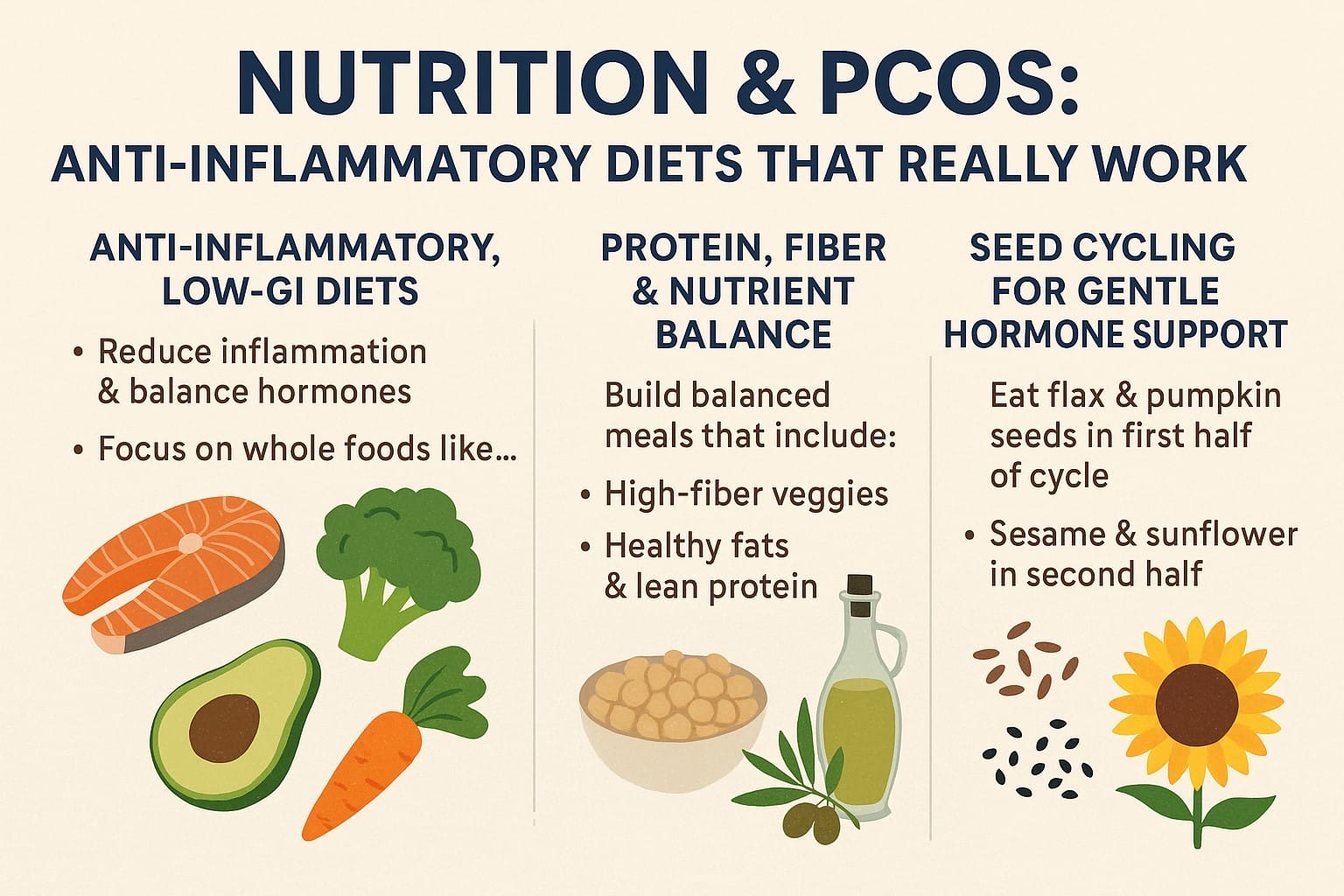
Anti‑Inflammatory, Low‑GI Diets
If you’ve ever felt like your body is working against you, chronic inflammation might be part of the picture. In people with PCOS, inflammation often flies under the radar—showing up as bloating, acne, fatigue, joint pain, or even anxiety. But it’s also quietly disrupting hormone function, insulin sensitivity, and ovulation behind the scenes.
What Inflammation Does to Hormones
Inflammation is the body’s natural response to injury or stress—but when it becomes chronic, it interferes with almost everything. In PCOS, low-grade inflammation contributes to:
Elevated testosterone levels
Increased insulin resistance
Disrupted ovarian function
Mood swings and fatigue
Skin issues and digestive discomfort
And here’s the kicker: a highly processed, high-sugar diet can fuel the fire. On the other hand, anti-inflammatory foods help soothe it—creating the conditions your body needs to recalibrate.
Why Low-Glycemic and Mediterranean-Style Eating Helps
A low-glycemic, anti-inflammatory diet is one of the most effective ways to manage PCOS naturally. Why? Because it keeps blood sugar stable and reduces the inflammatory load on your body.
The Mediterranean-style approach is especially helpful—it’s flexible, sustainable, and rich in nutrient-dense foods that support hormone health. It focuses on:
Whole, unprocessed foods
Balanced macronutrients (healthy fats, quality proteins, complex carbs)
A rainbow of vegetables and antioxidant-rich fruits
Herbs, spices, and healthy oils that fight inflammation
It’s not about perfection—it’s about consistency. Eating in a way that keeps your body calm, supported, and fueled throughout the day.
What to Eat More Of vs What to Minimize
Eat More Of:
Non-starchy vegetables: leafy greens, broccoli, cauliflower, zucchini
Low-glycemic fruits: berries, citrus, apples, pears
Whole grains: quinoa, brown rice, oats, buckwheat
Legumes: lentils, black beans, chickpeas
Healthy fats: olive oil, avocado, flaxseed, walnuts
Lean proteins: wild fish, pasture-raised poultry, tofu, tempeh
Herbs and spices: turmeric, ginger, cinnamon, garlic
Minimize or Avoid:
Refined sugars (sodas, candy, packaged sweets)
Processed carbs (white bread, pastries, sugary cereals)
Fried and fast foods
Processed meats
Inflammatory oils (canola, soybean, corn oil)
Artificial additives and preservatives
Start by making small swaps: add in more vegetables, use olive oil instead of vegetable oil, choose berries over juice. These changes may seem simple, but over time, they create a powerful ripple effect on your hormones and overall well-being.
Protein, Fiber & Nutrient Balance
One of the most effective ways to support your hormones and stabilize your energy with PCOS is through balanced blood sugar—and the key to that lies in how you build your plate.
Every time you eat, you have an opportunity to either spike or steady your insulin levels. When your meals are balanced—meaning they include protein, healthy fat, and fiber-rich carbs—your body stays calmer, more nourished, and less inflamed.
Balanced Plates to Stabilize Blood Sugar
Blood sugar spikes followed by crashes can trigger cravings, fatigue, mood swings, and hormone imbalances. For people with PCOS, keeping insulin levels stable is essential for reducing androgens, supporting ovulation, and improving overall metabolic health.
The basic rule: pair your carbs with protein and fat. This slows digestion, keeps you fuller longer, and prevents the sharp insulin surges that can throw your hormones off track.
PCOS-Supportive Protein, Fats, Fiber & Micronutrients
Let’s break down what to focus on:
Protein: Essential for satiety and hormone production. Good sources include eggs, legumes, chicken, turkey, tofu, tempeh, wild fish, Greek yogurt, and collagen peptides.
Fiber: A superstar for digestion, hormone detoxification, and blood sugar control. Get it from leafy greens, flaxseed, chia seeds, berries, beans, and whole grains like quinoa or oats.
Healthy Fats: These help regulate hormones and keep inflammation in check. Think olive oil, avocado, nuts, seeds, coconut, and omega-3-rich fish like salmon or sardines.
Micronutrients: Certain nutrients are especially helpful for PCOS:
Magnesium: calms the nervous system and improves insulin function (spinach, almonds, dark chocolate)
Zinc: supports ovulation and skin health (pumpkin seeds, legumes)
Vitamin D: often deficient in PCOS; supports hormone balance and fertility (fatty fish, eggs, sunshine)
Chromium & B-vitamins: aid in blood sugar regulation and energy production
Examples of How to Pair Foods
Here are some balanced, PCOS-friendly combinations to inspire your meals:
Breakfast: Scrambled eggs with spinach, avocado, and a slice of sprouted grain toast
Snack: Apple slices with almond butter and a sprinkle of cinnamon
Lunch: Quinoa bowl with lentils, roasted sweet potatoes, kale, olive oil, and tahini drizzle
Dinner: Grilled salmon with roasted Brussels sprouts and wild rice
Dessert: Coconut chia pudding with blueberries and chopped walnuts
You don’t need to count macros or track obsessively. Just aim for variety, color, and balance at each meal—and notice how much more grounded and supported your body starts to feel.
Seed Cycling for Gentle Hormone Support
If you’re looking for a simple, nurturing way to support your hormones naturally, seed cycling is a beautiful place to start. It’s low-effort, food-based, and rooted in rhythm—which is something many people with PCOS feel disconnected from.
While not a magic fix, seed cycling offers a gentle, cycle-aligned way to encourage hormonal balance using the nutrients and lignans found in specific seeds.
What It Is, How It Works, How to Start
Seed cycling involves eating two different pairs of seeds during specific phases of your cycle to support estrogen and progesterone production.
Here’s the basic idea:
During the first half of your cycle (follicular phase), you support estrogen
During the second half (luteal phase), you support progesterone
Each seed is chosen for its nutrient profile—rich in essential fatty acids, zinc, selenium, and plant-based compounds that help gently balance hormone levels over time.
It’s as simple as adding 1 tablespoon each of the two seeds to your meals daily—in smoothies, oatmeal, yogurt, or sprinkled on salads.
Seed Phases, Moon Syncing, and Gentle Hormonal Regulation Tips
If your cycle is regular:
Follicular Phase (Day 1–14 or menstruation to ovulation):
1 Tbsp ground flaxseed
1 Tbsp ground pumpkin seeds
These support estrogen metabolism and healthy detoxification.
Luteal Phase (Day 15–28 or ovulation to menstruation):
1 Tbsp ground sunflower seeds
1 Tbsp ground sesame seeds
These support progesterone production and reduce inflammation.
If your cycle is irregular (or absent), you can sync seed cycling with the moon’s phases:
New Moon to Full Moon → flax + pumpkin
Full Moon to New Moon → sunflower + sesame
This lunar-based rhythm helps your body re-establish hormonal flow, even when your period is unpredictable.
Tips to get started:
Buy your seeds raw and organic when possible
Grind seeds fresh or weekly and store them in the fridge
Stick with it for at least 2–3 cycles to start noticing changes
Pair seed cycling with other hormone-supportive habits like blood sugar balance and stress reduction for best results
Think of it as a ritual—a small, daily act of nourishment and reconnection with your body’s natural rhythms.
1‑Day Sample Menu + Meal Tips
You don’t need to follow a complicated meal plan to support your hormones—just focus on building simple, balanced plates with foods that nourish your body and keep inflammation low.
Here’s what a typical day might look like on a PCOS-friendly, anti-inflammatory, low-GI plan.
Sample Day of Eating for PCOS Support
Breakfast
Avocado toast with scrambled eggs + spinach
1 slice of sprouted grain or gluten-free toast
½ avocado, mashed with lemon juice and sea salt
2 pasture-raised eggs, scrambled with sautéed spinach
Optional: sprinkle with ground flaxseed for seed cycling support
Snack
Chia pudding with berries and walnuts
3 tbsp chia seeds soaked in almond milk
Topped with a handful of blueberries and chopped walnuts
Cinnamon for blood sugar balance
Lunch
Quinoa and chickpea bowl with greens and tahini drizzle
½ cup cooked quinoa
½ cup chickpeas
Mixed greens, roasted carrots, red cabbage
Drizzle of olive oil and tahini dressing
Optional: add pumpkin seeds for crunch and seed cycling
Snack
Apple slices with almond butter
1 small apple, sliced
1–2 tbsp unsweetened almond butter
Optional: dash of cinnamon for hormone support
Dinner
Grilled salmon with roasted Brussels sprouts and sweet potatoes
4 oz wild-caught salmon, seasoned with herbs and lemon
1 cup roasted Brussels sprouts in olive oil
½ medium sweet potato, roasted with turmeric and sea salt
Optional: sprinkle with sesame seeds for luteal phase support
Meal Prep & Planning Tips for Real-Life Consistency
Batch cook grains and proteins at the start of the week—think quinoa, brown rice, hard-boiled eggs, roasted chicken, or lentil soup
Wash and chop veggies ahead of time to throw together quick meals or salads
Keep healthy fats on hand—avocados, olive oil, flaxseed, tahini, and nuts make everything more satisfying
Rotate a few go-to meals you enjoy—repetition can make eating well much easier
Make use of leftovers—tonight’s dinner can become tomorrow’s lunch with a simple tweak
Eating for PCOS isn’t about being perfect—it’s about creating a rhythm that fits your life and supports your healing without adding stress. Think “progress over perfection,” and build from there.
Why This Works—What Research Shows
You’ve probably heard that food is medicine—but with PCOS, this goes deeper than just feeling better after a healthy meal. Research shows that your diet quality, especially your intake of omega-3s and fiber, plays a major role in how your body responds to insulin, inflammation, and hormonal imbalances.
Let’s take a look at why these anti-inflammatory nutrition strategies make such a difference.
Diet Quality and PCOS
A high-quality, nutrient-dense diet can significantly reduce the metabolic complications so common with PCOS—like insulin resistance, elevated androgens, and weight gain.
Studies have shown that low-glycemic, anti-inflammatory diets—especially those rich in omega-3 fatty acids—improve hormonal and metabolic outcomes in women with PCOS (Gautam et al., 2025). These diets closely resemble those recommended for managing type 2 diabetes, with a focus on whole foods, complex carbs, and anti-inflammatory fats.
In fact, following dietary patterns high in fiber and healthy fats has been linked to improved androgen levels and reduced obesity-related risks (Liepa et al., 2008). This is big news if you’re trying to manage symptoms like acne, irregular cycles, or weight fluctuations.
Omega-3 Fatty Acids
Omega-3s aren’t just heart-healthy—they’re hormone-friendly, too.
Research highlights that increasing omega-3 intake can improve insulin sensitivity, reduce systemic inflammation, and help regulate hormonal signaling (Rondanelli et al., 2014). That’s a powerful trifecta for anyone with PCOS.
Eating omega-3-rich foods—like wild salmon, sardines, flaxseeds, walnuts, and chia seeds—on a regular basis can help mitigate many of the metabolic dysfunctions associated with the condition (O’Connor et al., 2010).
Fiber Intake
Many people with PCOS aren’t getting enough fiber—and it shows. Low fiber intake has been linked to insulin resistance, weight gain, and irregular cycles (Leung et al., 2022).
Fiber helps regulate digestion, balance blood sugar, and support healthy gut bacteria—all of which play into hormonal health. Increasing fiber intake through foods like vegetables, legumes, chia seeds, and whole grains can support weight management and hormone regulation over time (Gautam et al., 2025).
One Size Doesn’t Fit All
It’s also important to acknowledge that everyone’s body is different. While these dietary changes are proven to help many people, individual responses may vary. That’s why personalized nutrition strategies, based on your lifestyle, symptoms, and preferences, work best in the long run.
The good news? You don’t have to get it perfect. Small, consistent changes rooted in nourishment—not restriction—can help you feel more in sync with your body and start seeing real shifts.
Tips to Get Started & Sustainable Habits
You don’t need a perfect plan, a pantry overhaul, or a week’s worth of meal prep to begin healing through food. You just need a few doable steps, taken consistently, with the intention to support—not punish—your body.
Here’s how to get started with small shifts that feel good and make a real impact over time.
Easy Swaps and Flavor Tips
Start where you are, with what you have. Here are a few simple swaps you can make today:
White rice → quinoa or cauliflower rice
Sugary cereal → steel-cut oats topped with berries and seeds
Soda or juice → sparkling water with lime, or herbal tea
Canola oil → extra virgin olive oil or avocado oil
Milk chocolate → dark chocolate (70%+ cacao)
Add flavor and hormone-loving nutrients with herbs and spices like cinnamon, turmeric, ginger, basil, garlic, and onion. Not only do they reduce inflammation—they make meals taste amazing.
Eating for Enjoyment and Hormone Support—Not Restriction
One of the most empowering things you can do is stop looking at food as something to control and start seeing it as something that supports you.
This means:
Letting go of “all or nothing” food rules
Tuning into how meals make you feel—energized, grounded, moody, bloated?
Giving yourself permission to enjoy your meals fully, without guilt
Eating to support your hormones is not about deprivation—it’s about creating safety in your body, and that includes emotionally.
Building Meals Around “Feel-Good Foods” That Regulate Energy and Mood
Try building each meal around this question: What’s going to help me feel steady and nourished in the next few hours?
Great starting points:
Complex carbs + fiber to keep energy stable
Healthy fats to keep you full and support hormone production
Protein to stabilize blood sugar and prevent crashes
Colorful produce to deliver micronutrients, antioxidants, and life-giving energy
And don’t underestimate the power of eating in a calm space, sitting down, and chewing slowly. Those habits—paired with nutrient-dense meals—are often what make the biggest difference over time.
FAQs
What foods help regulate hormones with PCOS?
Anti-inflammatory foods like leafy greens, berries, flaxseeds, olive oil, and wild-caught fish can support hormone balance by reducing inflammation and stabilizing blood sugar.
What should I avoid in my diet if I have PCOS?
Try to reduce or avoid refined sugar, white flour, fried foods, processed snacks, and sugary beverages—all of which can spike insulin and increase inflammation.
Can I still eat carbs if I have PCOS?
Yes! The goal isn’t to eliminate carbs, but to choose complex, low-glycemic carbs like quinoa, oats, sweet potatoes, and legumes that fuel your body without causing insulin spikes.
Do I need to take supplements if I eat a healthy diet?
Not always—but some people with PCOS benefit from targeted support like inositol, omega-3s, magnesium, or vitamin D. It depends on your symptoms, lifestyle, and lab work.
Is seed cycling really effective for PCOS?
Many people report more regular cycles, reduced PMS symptoms, and improved mood with seed cycling. It’s a gentle practice that works best alongside other diet and lifestyle changes.
Further Reading & Support
Want to dive deeper into a whole-body approach to PCOS healing? Don’t miss our full guide: How to Heal PCOS Naturally: Your Complete Guide to Feeling Better, Body and Mind – powerful, holistic roadmap that covers emotional, mental, physical, and spiritual healing with practical, supportive tools.
Recommended Books
- PCOS SOS by Dr. Felice Gersh
A go-to resource from a leading integrative OB/GYN, blending medical insight with natural healing strategies. Covers everything from insulin resistance to circadian rhythm support. - Healing PCOS by Amy Medling
A compassionate, step-by-step lifestyle plan from the creator of PCOS Diva. This book focuses on mindset, nutrition, movement, and self-care—all rooted in lived experience.
This journey with food isn’t about rules—it’s about relationship. The more you tune in to what truly nourishes you, the more empowered and aligned your healing will feel.
What’s worked for you so far? What’s still a challenge?
We’d love to hear your thoughts, reflections, or favorite recipes—let’s keep the conversation going. You’re not alone in this.


